
Continuous Compliance Monitoring: The Key to Securing Your Microsoft 365 and Google Workspace Environments
Continuous compliance monitoring enables organizations to stay secure in Microsoft 365 and Google Workspace without falling behind.
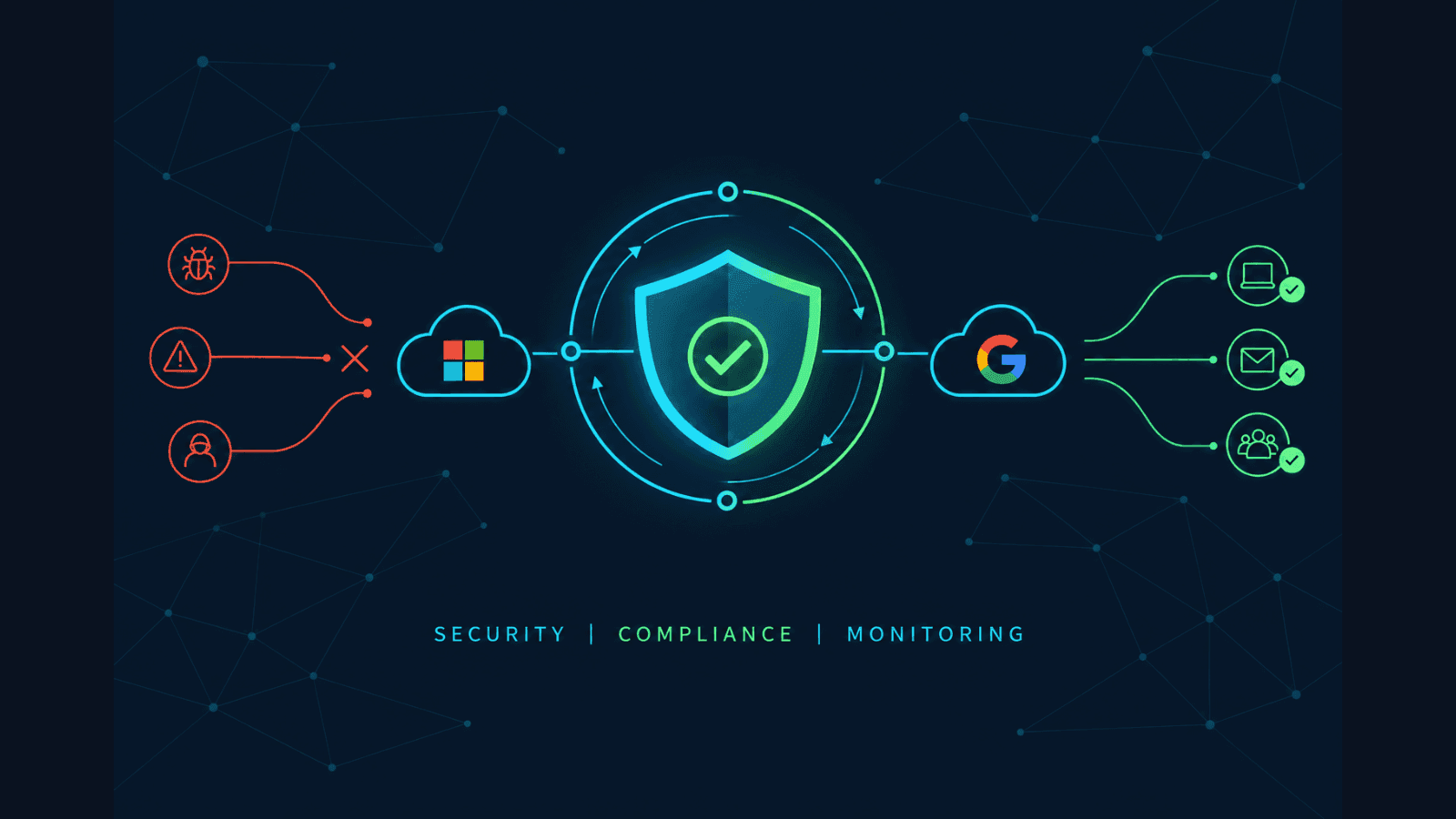
Continuous Compliance Monitoring: The Key to Securing Your Microsoft 365 and Google Workspace Environments
In a rapidly evolving threat landscape, a static security posture is a risky choice. How can organizations ensure they maintain compliance in Microsoft 365 and Google Workspace?
Why a One-Time Configuration Audit Goes Stale

This diagram shows how one-time audits fail to provide ongoing security.
A common approach to compliance used to be a one-time configuration audit. However, this method is increasingly inadequate, especially in dynamic environments like Microsoft 365 and Google Workspace.
Not only do configurations change due to user actions and administrative tasks, but both platforms frequently update their features and security protocols. Without continuous oversight, organizations can quickly become exposed to risks from misconfigured settings or outdated policies.
What Continuous Monitoring Means for Microsoft 365 and Google Workspace
Continuous compliance monitoring involves regularly assessing the security configurations and policies active within your Microsoft 365 and Google Workspace environments. This includes:
- Real-time assessments of configurations: Regular scans help identify any deviations from best practices or corporate standards.
- Dynamic reporting: Immediate insights into compliance status, trends, and potential vulnerabilities emerging from changes made.
- Automated reminders and actions: Leveraging automation can simplify follow-ups on compliance commitments or configurations needing attention, reducing workload for IT teams.
By implementing continuous monitoring, organizations ensure they do not just attain compliance but can maintain it in the face of ongoing changes and threats.
Evidence States: Verified, Failed, Not Applicable, Unknown
A robust continuous compliance monitoring strategy categorizes and tracks compliance evidence effectively. The states to monitor include:
- Verified: Correct configurations that align with compliance requirements.
- Failed: Controls or configurations that do not meet compliance standards, laying the groundwork for remediation.
- Not Applicable: Controls that are irrelevant or inapplicable to specific organizational environments.
- Unknown: Areas where no information is currently available, presenting potential blind spots needing attention.
Maintaining visibility into these states allows security teams to prioritize actions and allocate resources effectively.
How Failed Controls Become Remediation Work, Then a Retest

This diagram outlines the steps from failure to remediation and retesting.
When a control is identified as having failed, it does not simply become a point of concern. Instead, it triggers a remediation workflow:
- Assessment: Analyze the failure to understand the implications and required corrective actions.
- Remediation: Execute necessary adjustments or configurations to rectify the issue.
- Retest: Conduct follow-up testing to confirm that the control now meets the necessary compliance standards.
This approach not only mitigates risk but also builds an organizational culture of accountability and responsiveness toward security practices.
Ensuring a Proactive Security Posture
Continuous compliance monitoring is not merely a compliance tool, but a proactive security strategy. By integrating ongoing assessments into everyday workflows, organizations can:
- Reduce risk of data breaches: Forbid human error from creating vulnerabilities by ensuring that controls are always validated.
- Enhance operational efficiency: Eliminate manual checks and minimize administrative burdens through automation.
- Support regulatory requirements: Stay aligned with standards and compliance obligations by reporting on control status dynamically.
Conclusion: A New Era of Security
In conclusion, organizations leveraging continuous compliance monitoring within Microsoft 365 and Google Workspace not only enhance their security posture but facilitate a culture of ongoing vigilance. Given the expansive attack surface organizations must defend in today’s digital landscape, this approach is crucial to remaining vigilant against emerging threats. To learn more about securing these environments, explore our tailored resources for Microsoft 365 and Google Workspace.
The Attacker Already Knows...
In a world where attackers quickly adapt, your organization must do the same. Flexibility and continuous insight are your greatest allies in ensuring compliance and security. For deeper insights, consider scheduling a consultation.