
CTEM vs PTEM vs EASM vs CAASM: Navigating Modern Cybersecurity Frameworks
Explore the distinct roles of CTEM, PTEM, EASM, and CAASM in cybersecurity, helping you choose the right approach for your organization's needs.
CTEM vs PTEM vs EASM vs CAASM: Navigating Modern Cybersecurity Frameworks
In an increasingly complex cybersecurity landscape, security leaders must navigate a myriad of frameworks to effectively safeguard their organizations. But how do they choose the right approach?
Understanding the Different Categories

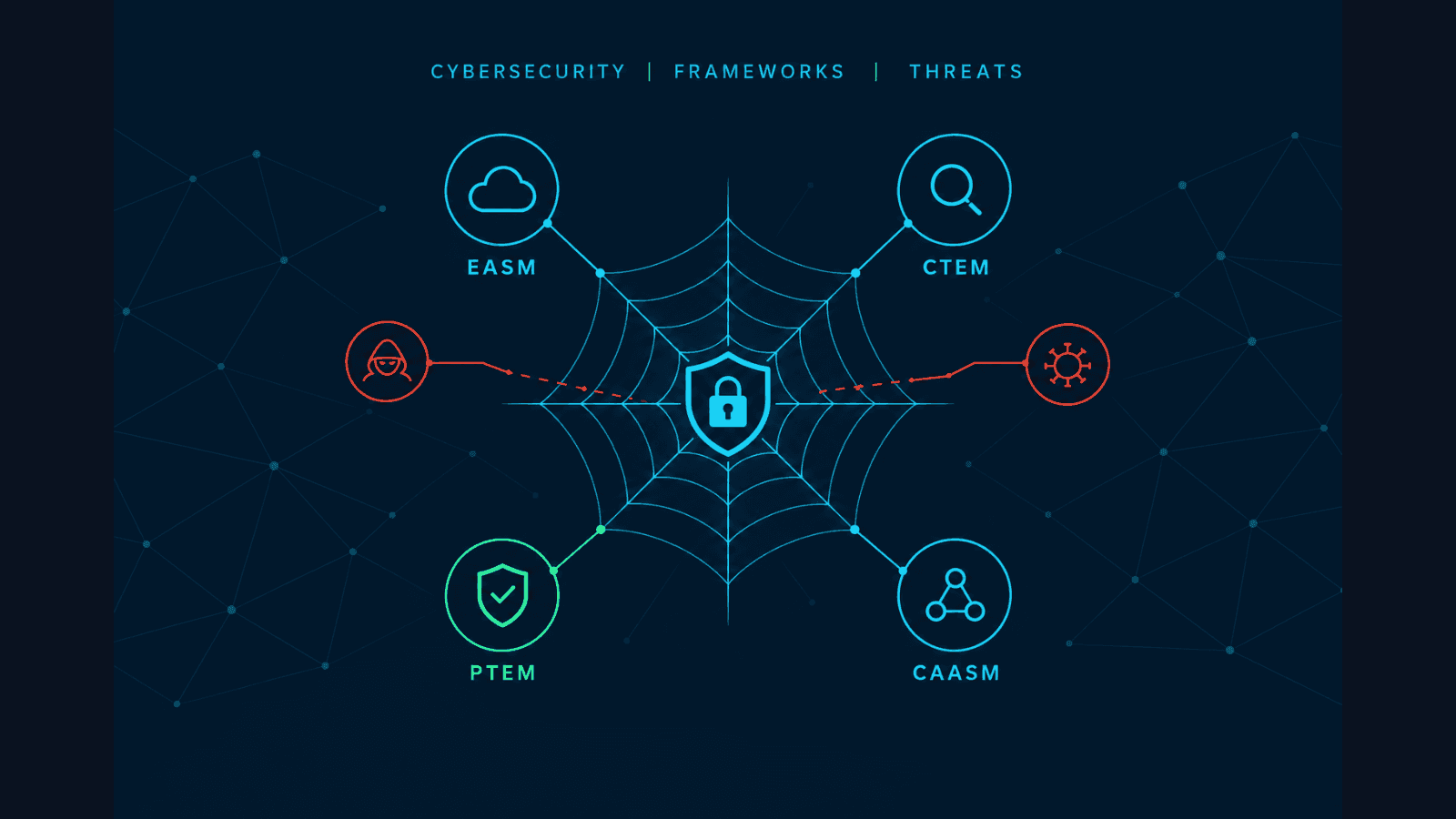
This diagram illustrates the distinct categories and functions of CTEM, PTEM, EASM, and CAASM.
In the ever-evolving realm of cybersecurity, frameworks like Continuous Threat Exposure Management (CTEM), Penetration Testing and Exploitability Management (PTEM), External Attack Surface Management (EASM), and Cloud Asset and Security Management (CAASM) have emerged, each serving distinct functions:
- CTEM focuses on continuous monitoring and assessment of potential threats, helping organizations stay ahead of emerging vulnerabilities.
- PTEM emphasizes testing and validating the exploitable vulnerabilities within an environment, providing proof of concepts for remediation.
- EASM enables organizations to visualize their external exposure and understand risks posed by assets visible to potential attackers.
- CAASM addresses the comprehensive inventory of cloud assets and their security posture, ensuring effective ownership and management of these resources.
Understanding what each category answers is essential for selecting the right framework based on specific organizational needs.
CTEM vs EASM: What’s the Difference?
While CTEM and EASM both aim to improve security postures, their approaches differ significantly.
- CTEM is proactive, focusing on continuous threat assessments, understanding attack vectors, and threat modeling. It enables organizations to visualize threats in real-time, enhancing predictive capabilities against potential breaches.
- EASM, on the other hand, concentrates on external exposure minimization. By identifying assets that are visible to the outside world, organizations can prioritize their defense strategies against the most significant risks that attackers may exploit.
Hence, CTEM can be viewed as a holistic, continuous approach complementing the visibility provided by EASM.
Setting the Stage: Where CAASM Fits
CAASM is critical for organizations leveraging cloud infrastructure. It serves the purpose of maintaining a comprehensive inventory of cloud assets, ensuring visibility into configurations and compliance across various platforms.
- Inventory Management: CAASM plays a pivotal role in identifying and inventorying cloud assets, classes of services, and configurations.
- Ownership and Responsibility: As organizations adopt cloud technologies, responsibility for these assets often blurs. CAASM helps clarify ownership and management responsibilities, thereby helping organizations maintain accountability.
Aligning CAASM with either CTEM or EASM can enhance security strategies by allowing for contextually relevant assessments of vulnerabilities in cloud solutions.
Where PTEM Fits: Testing and Proof
PTEM serves a crucial function in the cybersecurity lifecycle, focusing on the verification of vulnerabilities through real-world testing. This strategy proves invaluable for organizations looking to validate their security measures.
- Testing: PTEM involves simulated attacks and assessments that reveal how exposed a system truly is to various threats.
- Proof of Concept: By illustrating how specific vulnerabilities could be exploited, PTEM reinforces the need for remediation and responsible exposure management.
When integrated with CTEM, PTEM can provide concrete evidence of the ongoing risks against an organization's assets, increasing the effectiveness of remediation efforts.
Selection Criteria and Usage Scenarios
When evaluating frameworks like CTEM, PTEM, EASM, and CAASM, security leaders should use the following criteria:
- Organizational Needs: Identify the unique threats facing your company to determine which framework addresses those threats best.
- Compliance Requirements: Assess if your organization is subject to specific industry regulations that could influence your choice.
- Technology Stack: Consider how these frameworks align with existing security technologies within your organization.
- Resource Availability: Weigh the resources required to implement and maintain each framework against what your organization can allocate.
- Integration Potential: Evaluate how well a chosen framework can integrate with current tools and processes without disrupting workflows.
Each framework excels in particular scenarios, and understanding those contexts will optimize their effectiveness and fit within your overarching security strategy.
Validation Before Remediation: Critical Steps

This visual highlights the critical steps in validating vulnerabilities before remediation efforts.
Regardless of the framework chosen, organizations must validate the identified vulnerabilities before acting on them. Here’s why:
- Reduction of False Positives: Validation acts as a filter against false alarms, allowing security teams to focus on genuine threats.
- Evidence-Based Remediation: Before deploying fixes, demonstrating proof of vulnerability ensures that resources are used efficiently.
- Continuous Improvement: Establishing a methodical approach to validation and retesting promotes a culture of continual security enhancement within your organization.
By ensuring validation occurs before remediation, organizations can solidify their defenses and systematically address only those vulnerabilities that pose a real threat to their infrastructure.
The Threat Landscape is Evolving… Are You Prepared?
In a world where vulnerabilities are constantly emerging, understanding how CTEM, PTEM, EASM, and CAASM fit into your strategy can provide the clarity needed to enhance your cybersecurity posture. Effective selection and integration of these frameworks not only protect assets but also foster a culture of proactive cybersecurity management.
For deeper insights into attack surface comparison, check out this detailed resource. And to sharpen your cybersecurity strategy, consider this guide for best practices and advanced methodologies tailored for today's dynamic threat landscape.